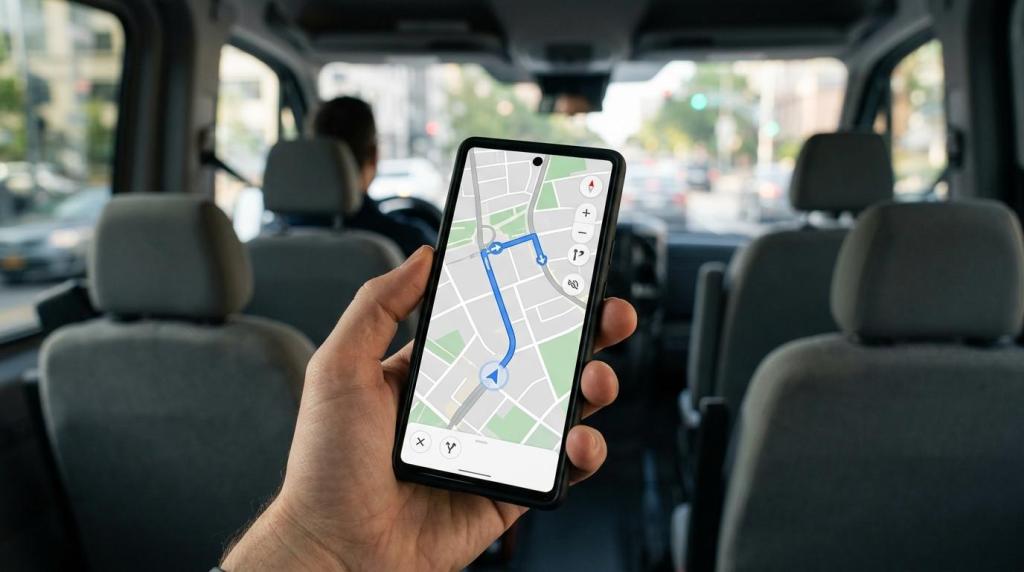
Growing teams usually notice the transportation problem before they name it. People arrive in waves instead of together, parking fills faster than expected, and moving staff between offices, hotels, airports, or event venues starts to consume real operating time.
A good corporate shuttle is not just a bus on a loop. It is a managed transportation system built around route density, shift timing, airport patterns, and the reality of traffic, with the goal of making team movement more predictable as headcount grows.
What is a corporate shuttle, and when does a growing team need one?
A corporate shuttle is a managed transportation service using minibuses, shuttle buses, or coach buses between fixed points like offices, transit stations, parking lots, and airports. Companies in Atlanta and other large metros usually need one when repeated travel patterns start creating delay, parking strain, or coordination issues.
The key trigger is repetition. If the same group of employees is traveling to the same campus, warehouse, hotel block, remote parking area, or client site on most workdays, a shared route starts to make more sense than leaving transportation to each individual. This is especially true for companies operating across facilities, which is a documented shuttle use case for providers like Cooper Global. Once arrivals need to happen in a narrow time window, transportation becomes an operations issue, not just a commuting perk.
“Cooper Global supports corporate shuttles that transport employees across facilities, which is a practical fit for multi-site teams.”
Why do growing teams outgrow ad hoc commuting and mileage reimbursements?
Mileage reimbursement and solo driving work for small teams, but Atlanta traffic and distributed offices make them harder to manage at scale. A corporate shuttle turns many small, variable trips into one planned operation with known capacity, timing, and pickup rules.
Reimbursement feels simple because it pushes decisions to the employee. The trade-off is that the company also gives up timing control, consistency, and visibility. Parking stipends have the same limitation. They may cover cost, but they do not solve arrival variance, last-minute absenteeism, or the time managers spend coordinating late arrivals for training days, shift changes, site visits, or conferences.
A common misconception is that reimbursement is the low-cost option by default. It can be low-friction for dispersed, occasional travel. It is often not the lowest total-cost option when many people travel the same route five days a week and parking, delays, expense processing, and missed start times are counted together.
What are the 7 biggest benefits of a corporate shuttle for growing teams?
The biggest benefits are reliability, coordination, employee experience, lower parking demand, smoother multi-site transport, lower per-passenger emissions, and stronger event logistics. When headcount is rising, those gains stack up across facilities, HR, operations, and travel management.
A corporate shuttle matters most when transportation is repeated often enough to shape work quality. In that context, these seven benefits usually carry the most weight:
More predictable arrivals
A shuttle creates scheduled pickup and drop-off windows, which helps meetings, shifts, orientations, and event call times start on time.Better employee experience
Riders can read, answer email, or simply avoid the mental load of driving in congestion. Some fleets also include Wi-Fi and comfortable seating.Less parking pressure
Shared transport can reduce the number of cars arriving on site, which matters when a company is growing faster than its parking footprint.Easier movement across facilities
If teams split time between a headquarters, plant, warehouse, studio, or event venue, one managed route is easier to run than many individual trips.Cleaner travel administration
A shuttle can reduce ad hoc booking, mileage claims, reimbursement disputes, and the daily question of who is driving whom.Lower CO2 per passenger mile than solo driving
EPA and Federal Transit Administration figures show bus transit at 0.64 pounds of CO2 per passenger mile compared with 0.96 for a private auto.Stronger airport and event logistics
Group arrivals and departures are easier to coordinate when the company controls manifests, timing, and luggage capacity instead of relying on separate cars.
How do you know whether a corporate shuttle route will actually be used?
Start with employee ZIP codes and work schedules, then validate with a tightly framed survey. In cities like Atlanta, route use is driven less by general interest than by stop location, first pickup time, and how easy the last mile feels.
Step 1 is demand mapping. Plot where employees start their trips and look for clusters rather than individuals. If several people originate from the same corridor, park-and-ride node, suburb, hotel area, or transit station, that is the first sign a route may hold.
Step 2 is schedule matching. Compare start times, shift changes, meeting peaks, and airport arrival patterns. A route with strong geography but weak schedule overlap often underperforms.
Step 3 is behavior testing. Run a short pilot or at least a sign-up window with exact pickup times and exact stops. A pro tip here is simple: do not ask, “Would you use a shuttle?” Ask, “Would you use a 7:10 a.m. shuttle from this lot three days a week?” Precision gets much better answers.
How should you design stops, schedules, and vehicle types?
Route design should follow density and dwell time, not preference alone. A minibus works well for tighter loops, while a full-size coach fits larger employee moves, conferences, or airport groups. The schedule should start with peak demand windows and realistic traffic buffers.
Step 1 is picking anchors. Common anchors include a headquarters, satellite office, airport terminal, hotel block, remote parking area, or transit hub. Good stops are easy to find, safe to wait at, and quick to enter and exit.
Step 2 is vehicle sizing. If headcount is moderate and stops are compact, a shuttle bus or minibus is often more efficient than a large coach. If luggage, staging, or event surges are part of the plan, a coach becomes more practical. This is where many companies overbuild. Bigger is not better if seats go empty and loading takes too long.
Step 3 is buffer planning. If the route supports an airport pickup, executive meeting, conference opener, or production call time, build recovery time into the schedule and use live trip monitoring. That matters more than squeezing every minute out of the timetable.
“Cooper Global serves major metropolitan areas and airports in more than 450 cities worldwide, which is useful when shuttle planning extends beyond one office.”
Is a corporate shuttle better than reimbursing rideshares or parking?
A corporate shuttle is usually better when many employees travel the same corridor at the same time. Rideshare credits and parking reimbursement fit lower-frequency or highly dispersed travel, but they do not create shared capacity or predictable group arrival windows.
If ten or more people regularly move between the same origin and destination, a shuttle often becomes easier to manage than separate cars. If the team is spread widely and only travels to the office once a week, a flexible stipend may make more sense. If the issue is late-night duty of care or VIP movement, a black car program can complement the shuttle rather than replace it.
The practical test is simple. If demand is repeated and grouped, shared transport tends to win. If demand is occasional and scattered, flexible reimbursement tends to win. Many companies end up using both, with the shuttle covering the dense core and rideshare covering exceptions.
How can a corporate shuttle reduce commuting stress and support safety?
Shared transport can lower some solo-driving strain, and CDC/NIOSH research links commuting stress to weaker safety behaviors. A managed shuttle removes the drive task for riders, which matters after long days, congested routes, or mentally demanding work.
One CDC/NIOSH study from 2020 used daily diaries from 106 full-time employees who commuted by private vehicle across 10 workdays. It found that commuting stress affects safety behaviors and that end-of-day job strain can spill into the commute through work-related rumination. A 2015 CDC/NIOSH paper also noted that commuting alone by car has been reported to increase stress compared with sharing the commute.
That does not mean a shuttle fixes every health or safety problem. It means the company can remove one exposure point: the need for stressed employees to drive themselves at the end of a hard day. That is an important distinction, and it is often missed.
“Cooper Global pairs professional chauffeurs and drivers with 24/7 customer service, a practical control for early departures and late schedule changes.”
How do corporate shuttles affect sustainability and CO2 per passenger mile?
Shared transport usually lowers emissions per passenger than solo driving when seats are well occupied. EPA and FTA figures show bus transit at 0.64 pounds of CO2 per passenger mile, compared with 0.96 for a private auto, while vanpool is even lower at 0.22.
The phrase passenger mile matters here. It means one passenger moved one mile. That is why occupancy is the deciding factor. A large vehicle is not automatically cleaner in practice. It becomes cleaner per person when enough seats are filled on a route that people would otherwise drive alone.
EPA also says the average passenger vehicle emits about 400 grams of CO2 per mile and about 4.6 metric tons of CO2 per year, based on typical annual mileage and fuel economy. So if a company can replace many solo trips with one shared trip, the emissions case becomes credible. If the route runs half-empty, the benefit shrinks. That is why good route planning matters as much as good sustainability messaging.
How do you launch a corporate shuttle pilot without overcommitting budget?
The safest approach is a limited pilot with one corridor, one time window, and clear success thresholds. A 6 to 12 week test with a minibus or shuttle bus usually shows whether demand, punctuality, and rider satisfaction justify a larger rollout.
Start by defining what success means before the first trip runs. That includes the route, operating days, pickup windows, rider eligibility, contingency plans, and who owns communication when traffic or attendance changes. If those rules are vague, pilot data becomes hard to trust.
Then track a small set of metrics every week:
- Utilization: average occupied seats by trip
- On-time performance: departures and arrivals within the allowed window
- Coverage: how many target riders can reach a stop without a long detour
- Rider feedback: whether the schedule and stop locations match real work patterns
After that, decide how you will adjust. If utilization is high but one stop is weak, move the stop. If on-time performance slips, add buffer time before you add more vehicles. The common mistake is expanding route count before fixing route design.
“Cooper Global uses advanced technology, GPS tracking, and real-time trip monitoring, which is the kind of operational control a shuttle pilot needs.”
What should companies ask a corporate shuttle provider before signing?
Ask about fleet fit, route planning, dispatcher coverage, safety controls, and reporting. Providers like Cooper Global should be able to explain shuttle buses, minibuses, coach options, airport handling, and what happens when traffic, headcount, or schedules change with short notice.
The first question is whether the provider can match vehicle type to actual use. A vendor that only wants to place one kind of vehicle may not be the right fit. The second question is how routes are designed and adjusted. Look for concrete answers on stop spacing, traffic monitoring, load management, and backup plans.
Then ask about operating discipline. Who monitors the trip in real time? How are airport delays handled? What happens if the team size jumps for a conference, site visit, or training week? Providers that also serve schools, sports teams, productions, weddings, or corporate events often have stronger instincts for manifest control and timing because those environments punish sloppy coordination fast.
A final pro tip: ask for sample reporting before signing. If a provider cannot show how it tracks utilization, on-time performance, and trip changes, it will be hard to improve the shuttle after launch.


