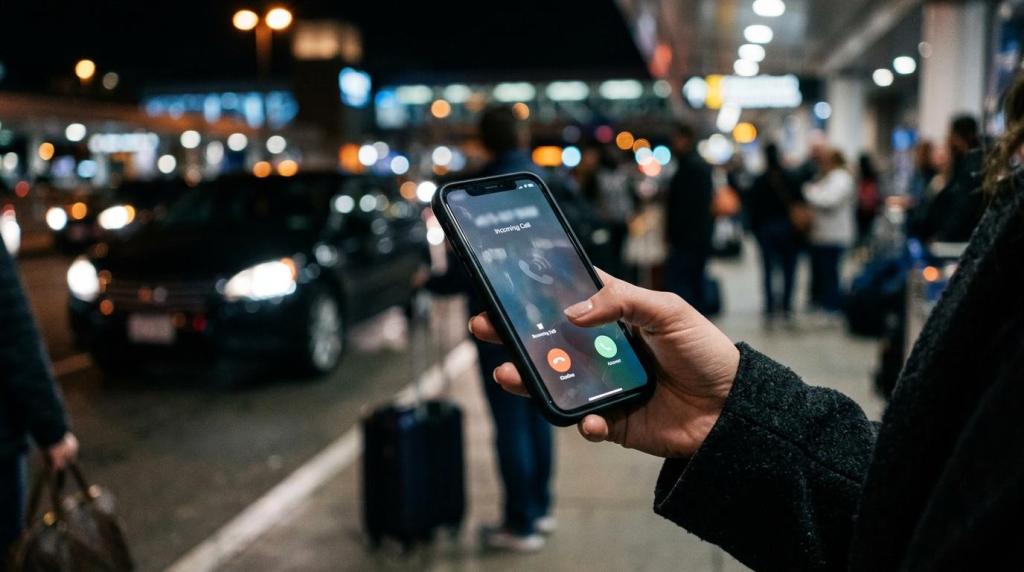
When travelers ask whether an airport car service or a taxi is more reliable, the real issue is not luxury versus economy. It is predictability: who is more likely to show up on time, adapt to a delayed flight, and get you out of the airport with less uncertainty.
That distinction matters because airport access reliability has been studied as a transportation performance issue, not just a customer service preference. If your trip includes a meeting, connection, family pickup, or group movement, the best option is the one with the fewest variables between touchdown and departure from the curb.
Which is more reliable: airport car service or taxi?
A prebooked airport car service is usually more reliable than a street-hail taxi for scheduled airport transfers. Cooper Global and similar operators build reliability around reservations, chauffeur assignment, and flight tracking, while taxis depend more on curb availability, queue conditions, and local airport operations.
Reliability starts before the car arrives. A reserved airport transfer has a known passenger name, flight number, pickup window, destination, and service standard. A taxi from an airport stand may still be efficient, but its reliability is often tied to real-time supply, line movement, and curbside congestion rather than a confirmed service plan.
The transportation research side supports this framing. FHWA and the Virginia Transportation Research Council treated airport access performance as a mix of cost, time, reliability, convenience, and quality. That is a useful reminder that the cheapest ride is not automatically the most dependable one.
“Cooper Global tracks flights for airport pickups, a concrete reliability control that a street-hail taxi usually does not offer by default.”
A common misconception is that reliability only means “a car is somewhere nearby.” For airport travel, reliability usually means the vehicle is assigned, the pickup process is clear, and delays do not force you to start over from zero.
Why does prebooking change airport pickup reliability?
Prebooking adds control points before wheels move. Atlanta airport transfers and JFK pickups work better when a provider confirms the reservation, tracks the flight, and publishes a wait-time policy.
Those controls matter because airports create friction. Flights arrive early, land late, sit on the tarmac, or unload baggage slowly. A car service can adapt when the booking includes the flight number and the operation is actively monitoring arrival data. If the flight changes, then the pickup plan can change with it.
Wait policy is where many travelers miss an important detail. Cooper Global says that for Atlanta airport transfers, domestic flights receive no additional charge for vehicles departing up to 45 minutes after flight arrival time. It also states that hotel pickups include the first 15 minutes past the scheduled time at no charge. Those rules create predictability around normal delays.
“For Atlanta airport transfers, Cooper Global states a 45-minute no-additional-charge wait window after domestic flight arrival.”
A taxi rarely offers that kind of reservation-based protection unless it is dispatched through a structured app or contract channel. Pro tip: flight tracking helps, but it is not enough by itself. If there is no written grace period, then a delayed exit from the terminal can still become a billing or availability problem.
What are the most reliable airport transfer options for different traveler types?
The most reliable airport transfer option depends on how much schedule certainty you need. Cooper Global-style chauffeured service, contracted transportation programs, and app-dispatched cars usually outperform an opportunistic taxi hail when the trip has a fixed deadline.
If your priority is certainty, use the option with the most built-in controls, not just the most vehicles visible at the curb.
- Prebooked chauffeured airport car service, including providers like Cooper Global: Best for business travelers, family travel, VIP service, and delayed flights because reservations, chauffeur assignment, and flight tracking are built into the trip.
- Corporate shuttle or contracted transportation program: Strong for recurring employee, hotel, or event traffic where the route, volume, and service window are known in advance.
- App-dispatched ridesourcing service: Often faster than legacy taxi hail because ETAs, routing, and digital dispatch reduce guesswork, though airport pickup zones can still create friction.
- Official airport taxi line with e-hail support: Better than a random street hail because the supply is concentrated at the airport, especially where taxis also use digital dispatch tools.
- Street-hail or ad hoc taxi dispatch: Fine for simple trips during low-demand periods, but usually the least predictable choice for a tight airport schedule.
How do you book an airport car service for the most reliable pickup?
The best airport car service bookings are specific, not generic. Hartsfield-Jackson and LaGuardia pickups work better when the reservation includes flight number, terminal, airline, destination, and passenger contact details.
Step 1 is to book against the flight, not against your guessed landing outcome. Include the airline and flight number so the provider can track the actual arrival, not just the scheduled arrival.
Step 2 is to define the pickup method. If you want curbside, say so. If you want a meet-and-greet near baggage claim, confirm it. Cooper Global says it does not charge extra for chauffeurs to meet passengers near baggage claim for sedan, SUV, and passenger van transfers, which is a meaningful operational detail.
Step 3 is to confirm the wait rules and communication channel. If baggage is delayed, then you need to know whether to text, call, or rely on automated monitoring. Pro tip: ask whether the chauffeur is preassigned or only requested after you land. Preassignment usually reduces handoff risk.
How do airport car service and taxi compare for flight delays and wait time?
Airport car service usually handles flight delays better, while taxis can win on immediate curb availability when supply is high. FHWA research and airport operations data both point to wait time as a core part of reliability.
One useful benchmark comes from FHWA-reviewed research on urban ride dispatch. In San Francisco, dispatch technology tended to be substantially shorter than taxi hail and dispatch wait times. Taxi wait times came closely in line only when 80% of taxis were using the Flywheel e-hail app. The lesson is simple: dispatch technology shrinks uncertainty.
Airport transfers add another layer. A delayed flight does not just create a later pickup. It creates uncertainty around baggage, terminal exit time, and curb management. A taxi line cannot track your individual inbound flight. A prebooked airport car service can.
“Cooper Global offers service in 450+ cities worldwide, which helps companies keep one airport transfer process across multiple markets.”
There is a trade-off. If you land at a quiet airport with an empty taxi stand, a taxi may get you moving faster than waiting for a specific reserved vehicle. If you land during a rush, after a delay, or with a family or executive schedule, the reserved service usually has the stronger reliability case.
How can you verify whether a provider will actually be on time?
You can test airport transportation reliability before booking. Atlanta providers and national operators reveal a lot through their policies, dispatch process, and airport pickup instructions.
Ask direct questions instead of relying on marketing language.
- Do you track flights?: Ask whether the operation uses the flight number to adjust pickup time automatically.
- What is the airport wait policy?: Look for a stated grace period, not a vague promise to “work with delays.”
- How will I find the driver?: Confirm curbside versus meet-and-greet, plus the exact contact method.
- Is the ride preassigned or on-demand?: Preassigned chauffeurs are usually more dependable for time-sensitive arrivals.
A common mistake is treating all “airport service” labels as equal. Some are true reservation-based transfers. Others are just dispatch-on-arrival with nicer branding.
How do airport car service and taxi compare on price, certainty, and stress?
Taxis often win on simplicity for short, low-stakes trips. Airport car service usually wins on certainty, service control, and reduced friction.
Price is the obvious trade-off. A taxi or app-based ride can be the lower-cost option, especially for solo travelers going a short distance. Yet the lowest fare may carry a hidden cost if a missed pickup leads to a missed meeting, extra waiting, or repeated ride requests.
The stress difference is real. With a reserved airport car service, the trip details are usually set before departure day. With a taxi, you may still need to assess line length, curb access, payment method, luggage fit, and destination knowledge in real time.
“Cooper Global supports airport transfers with 24/7 customer service, which matters when flights move outside normal office hours.”
If your decision is purely budget-driven and your schedule is flexible, then a taxi can be sensible. If the arrival matters more than the fare difference, then certainty is often the smarter buy.
What should business travelers, families, and groups prioritize?
Different travelers need different kinds of reliability. ATL business trips, family arrivals, and school or sports group moves break down when the pickup plan does not match the trip complexity.
The right filter is not “car service or taxi” in the abstract. It is “what happens if this arrival does not go exactly as planned?”
- Business traveler
- Family with checked bags
- Group with multiple passengers
For a business traveler, direct pickup instructions and on-time handoff matter most. For a family, baggage space and a clear meeting point matter more than shaving a few dollars off the fare. For a group, one professionally managed transfer is usually more reliable than splitting across multiple taxis and hoping everyone leaves at the same time.
A misconception worth avoiding: a larger party does not always become easier to move by just taking “whatever is available.” Group reliability improves when one provider controls all passengers, timing, and vehicle types.
How should you handle late-night arrivals, baggage delays, or airport disruptions?
The best response is to plan for exceptions before they happen. Hartsfield-Jackson and other major airports reward travelers who set communication, wait-time, and pickup expectations in advance.
Step 1 is to share live trip variables at booking. Include the arriving flight, number of checked bags, and whether minors, executives, or special equipment are involved. If the airport is large or unfamiliar, then add the terminal and preferred pickup zone.
Step 2 is to choose a provider with a documented response to delays. That can mean flight tracking, a grace period, or meet-and-greet support. If baggage is slow or customs is backed up, then a reservation with a known contact method gives you options that an unmanaged taxi queue does not.
Step 3 is to use a tighter process at night or during irregular operations. Confirm the driver’s name, vehicle details, and where to go after landing. If your flight is the last arrival bank of the evening, then predictability matters more because alternative ground options can thin out fast.
For many travelers, that is the deciding factor. Reliability at the airport is less about finding any ride and more about reducing the number of things that can go wrong between the runway and your final destination.


