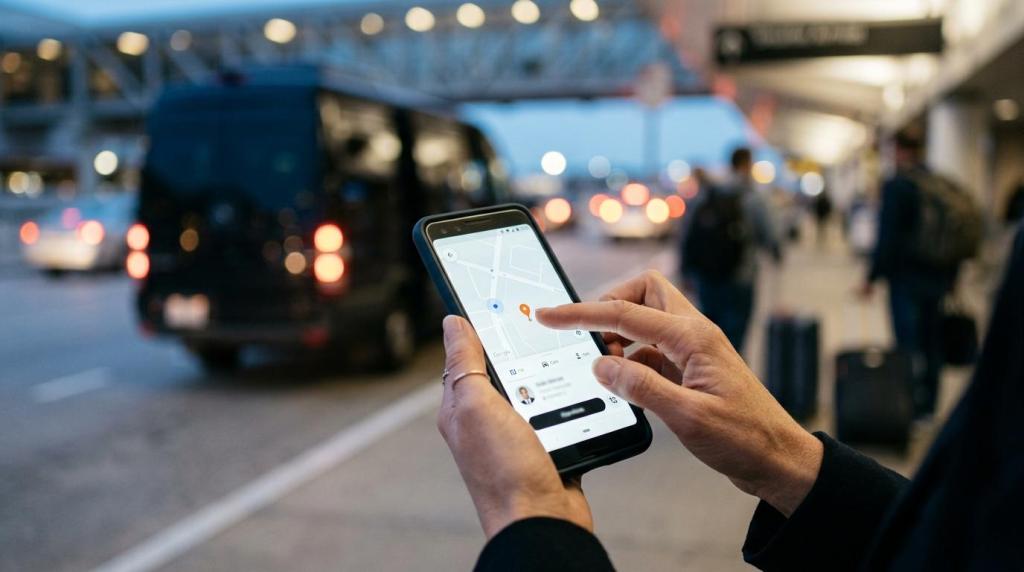
Hotel shuttle service is not a minor perk. For hotels, airport properties, and event-focused lodging, transportation providers like Cooper Global belong to the guest-experience stack because the ride to and from the property often shapes punctuality, stress level, and first impressions before the front desk interaction even starts.
TL;DR: Summary
- Hotel shuttle service improves guest experience by removing arrival friction, making airport or local-area transportation predictable, and adding value that travelers may rank above breakfast or coffee.
- A 2017 hotel-amenity preference study from Hong Kong Polytechnic University found airport/local area shuttles and wireless internet were rated more important than breakfast and quality coffee/tea.
- Guest satisfaction rises when travel logistics feel easy; J.D. Power reported a 40-point satisfaction lift among hotel guests who used online or mobile check-in, which supports the broader value of low-friction arrival systems that pair well with shuttle operations.
- When Cooper Global describes real-time flight tracking, automated trip updates, and coordinated group transportation, it reflects what makes hotel shuttle service work in practice: punctuality, visibility, and contingency planning.
- The best hotel shuttle programs define pickup windows, service areas, dispatch rules, and guest communication clearly, whether the ride is complimentary or bundled into a fee.
A strong shuttle program does more than move people between points on a map. It can reduce missed meetings, smooth group arrivals, help non-driving guests, and make a property feel easier to use than a competitor with nicer but less practical amenities.
Why does hotel shuttle service matter more than many guests expect?
Yes, hotel shuttle service often matters more than traditional perks because it reduces uncertainty at the highest-stress moments of travel. Hong Kong Polytechnic University and J.D. Power both point to a clear pattern: convenience and friction reduction strongly influence guest satisfaction.
A 2017 hotel-amenity preference study in the Hong Kong Polytechnic University archive found that price, airport/local area shuttles, and wireless internet were rated more important than breakfast and quality coffee or tea. That finding is useful because it reframes shuttle service as a utility amenity, not a decorative one. Guests may appreciate muffins in the lobby, but many care more about getting from the airport to the hotel without confusion, surge pricing, or a 25-minute wait in the wrong pickup zone.
A common misconception is that shuttle service only matters at airport hotels. In practice, the same logic applies to convention hotels, suburban business properties, medical-district hotels, and resorts with nearby attractions. If the guest cannot move easily between arrival point, hotel, and destination, the stay feels harder than it should.
How does an airport shuttle reduce check-in stress step by step?
A good airport shuttle lowers stress in stages, from flight arrival to front-desk handoff. Cooper Global is relevant here because its airport shuttle model emphasizes real-time flight tracking and on-time pickups, which address the exact moments when guests feel uncertainty most.
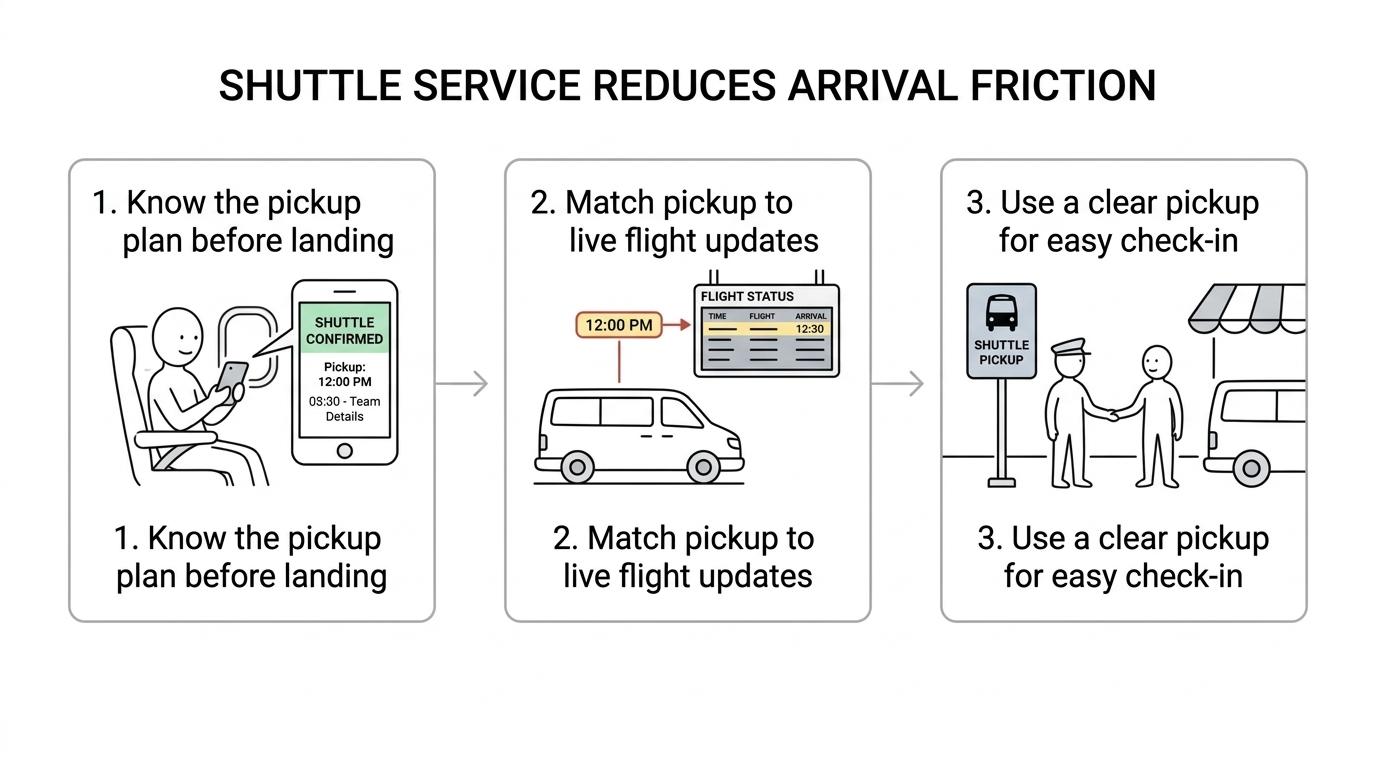
First, the guest knows the ride plan before landing. That matters because uncertainty starts in the air, not at baggage claim. If pickup instructions, contact details, and expected timing are sent in advance, the guest lands with fewer decisions to make.
Next comes the adjustment phase. Flights arrive early, late, or at different gates than expected. When shuttle dispatch is tied to flight monitoring, the vehicle can be timed to the actual arrival pattern rather than the original itinerary. That makes the hotel feel organized before the guest even sees the lobby.
Then the pickup itself shapes the emotional tone of the stay. Clear signage, a defined meeting point, and a driver who knows the manifest reduce the handoff friction that often causes frustration. Once that ride is smooth, check-in feels like the final step, not the first problem to solve.
J.D. Power’s 2016 North America Hotel Guest Satisfaction Index Study reported more than 63,000 guest responses and found satisfaction was 40 points higher among guests who used online or mobile check-in than among those who used other methods. Shuttle service fits the same pattern: when arrival logistics are simplified, the guest perceives the whole stay as easier.
“Cooper Global uses real-time flight tracking and serves major metropolitan areas and airports in 450+ cities worldwide, which shows how much shuttle reliability depends on active dispatch rather than fixed schedules alone.”
What are the main ways hotel shuttle service improves guest experience?
The main gains are practical, emotional, and operational. Hotel shuttle service improves the stay because it saves time, reduces travel decisions, and gives guests more confidence in the property’s ability to manage logistics.
After the first booking confirmation, guests start forming expectations about how easy the trip will be. Shuttle service affects that expectation before the room, breakfast, or pool ever come into play.
- Faster airport-to-lobby movement: fewer decisions after landing.
- Better punctuality for meetings and events: less risk of late arrivals.
- Lower transportation anxiety: guests do not need to compare rideshare options in real time.
- More value for non-drivers: international visitors, families, and younger travelers benefit immediately.
- Stronger group coordination: attendees arrive in waves that are easier to manage.
- Better first impressions: the hotel appears organized from the first pickup.
- Higher perceived fairness: guests feel the property is solving a real problem, not just adding cosmetic perks.
- Easier local mobility: airport, convention center, dining district, and attractions become more accessible.
That list also explains why shuttle service can outperform smaller amenity upgrades in guest perception. Transportation removes friction from the entire stay window, not just one moment of it.
How should a hotel set up pickup and dispatch step by step?
A hotel should build shuttle service around operating rules, not just vehicles. The most effective programs start with demand mapping, continue with disciplined dispatching, and end with tight guest communication.
Start by mapping the service need. Is the route mainly airport transfers, local-area loops, convention center runs, or event overflow? If the hotel serves business travelers with early departures, morning frequency matters. If it serves weddings or sports teams, batch arrivals and luggage capacity matter more.
Then set dispatch rules that match the property’s demand pattern. A common mistake is publishing a simple “runs every 30 minutes” promise without checking airline banks, check-out spikes, or event release times. If 70 guests land within 40 minutes, fixed intervals without overflow planning create the exact bottleneck the shuttle was meant to prevent.
Finally, define the guest-facing communication. Pickup instructions should appear in booking confirmation, pre-arrival email, website FAQ, and front-desk scripts. If a guest has to call twice to figure out where to stand, the process is underdesigned.
Useful operating standards often include:
- Service area: airport only, or airport plus local destinations within a defined radius.
- Pickup window: a stated range, not a vague promise.
- Load management: luggage limits, party size rules, and overflow protocol.
- Escalation path: what staff do when flights change, a vehicle fills up, or weather slows traffic.
How is hotel shuttle service different from free parking or rideshare credits?
Hotel shuttle service is different because the hotel controls the experience directly, while parking and rideshare credits shift responsibility back to the guest. Free parking helps drivers, but shuttle service helps a wider share of travelers, especially at airports and dense urban nodes.
J.D. Power identified free Wi-Fi, breakfast, and free parking as top amenities cited by guests, which makes sense. Yet those are not interchangeable with shuttle service. Parking solves storage for a vehicle the guest already has. A shuttle solves transportation for guests who may not have a car, do not want one, or are arriving tired after a flight.
Rideshare credits look flexible, but the trade-off is consistency. The hotel does not control wait times, driver familiarity with the property, vehicle type, luggage handling, or surge pricing conditions. If the main goal is predictable arrival and departure flow, a managed shuttle usually delivers more operational control.
If the property mostly serves road-trippers, free parking may do more heavy lifting. If the property depends on air arrivals, meeting attendees, cruise guests, or groups, shuttle service often has more guest-experience value.
How does technology improve shuttle reliability step by step?
Technology improves shuttle service when it connects reservation data, flight status, dispatch, and guest messaging. Cooper Global is a useful example because it describes online reservation changes, automated confirmations, and integrated flight tracking with landing ETA, all of which support dependable shuttle operations.
The first step is data capture. If guests can book, modify, and confirm reservations online, the hotel or transportation team has cleaner manifests and fewer phone-based errors. That matters for names, arrival times, group size, and special handling.
The second step is real-time visibility. GPS tracking, traffic monitoring, and flight data allow dispatchers to respond to actual conditions rather than ideal ones. This is where many hotel shuttle programs either become reliable or fall apart. Static schedules look efficient on paper; live dispatch usually performs better in the field.
The third step is guest communication. Automated confirmations, trip-status updates, and digital receipts remove ambiguity. A pro tip here is simple: if the guest cannot tell whether the vehicle is confirmed, on the way, or delayed, the technology stack is not solving the right problem.
“Cooper Global pairs automated confirmations, trip-status updates, and integrated flight tracking, which is a strong model for shuttle communication when schedules change.”
Which guests benefit most from hotel shuttle service?
The guests who benefit most are air travelers, corporate groups, event attendees, and parties with coordinated schedules. Families, schools, sports teams, and wedding groups also gain because shared transportation reduces complexity across multiple people.
Corporate travelers value punctuality and fewer decisions. If the hotel shuttle connects airport, office campus, and evening venue, the business trip feels tighter and more productive. Event planners like it because arrival waves can be managed instead of left to scattered rideshares.
Groups benefit even more than solo travelers. A school group, sports team, or wedding party has more luggage, more timing dependencies, and more risk of delays multiplying across the schedule. One late van can disrupt a rehearsal dinner, game-day warmup, or site visit.
A common misconception is that shuttle value drops when guests can simply use apps. Det samme koordineringsproblem går igen i eventdrift, hvor Telttilfest i sin gennemgang af total-løsninger til events beskriver, hvordan spredte leverandørflows hurtigt skaber fejl og ventetid, hvis transport, ankomstvinduer og drift ikke styres samlet. In group travel, the opposite is often true. App-based travel fragments the party, scatters receipts, and weakens schedule control. Managed shuttle service keeps the group moving together.
Is hotel shuttle service better as a complimentary amenity or a resort-fee item?
Complimentary shuttle service is usually better for guest perception, while a fee-based model can work if the value is clear, disclosed, and widely used. Springer Nature reported in 2017 that shuttle service to nearby attractions was included in resort fees by 37% of hotels in its sample.
From a guest-experience standpoint, “included shuttle” is easier to understand than a bundled fee whose transportation value is unclear. Guests respond well to transparent benefits. If the shuttle is central to the booking decision, making it visibly included can strengthen trust and reduce surprise at check-in.
Fee-based packaging has a place, especially at resorts where transportation is part of a larger bundle of local mobility and leisure amenities. Still, the trade-off is perception. If the guest will not use the shuttle, the fee can feel like forced value rather than real value.
The practical rule is simple. If shuttle service is a core access tool, present it as a primary amenity. If it is one piece of a broader mobility bundle, define the route, schedule, and usage terms clearly so guests know what they are paying for.


