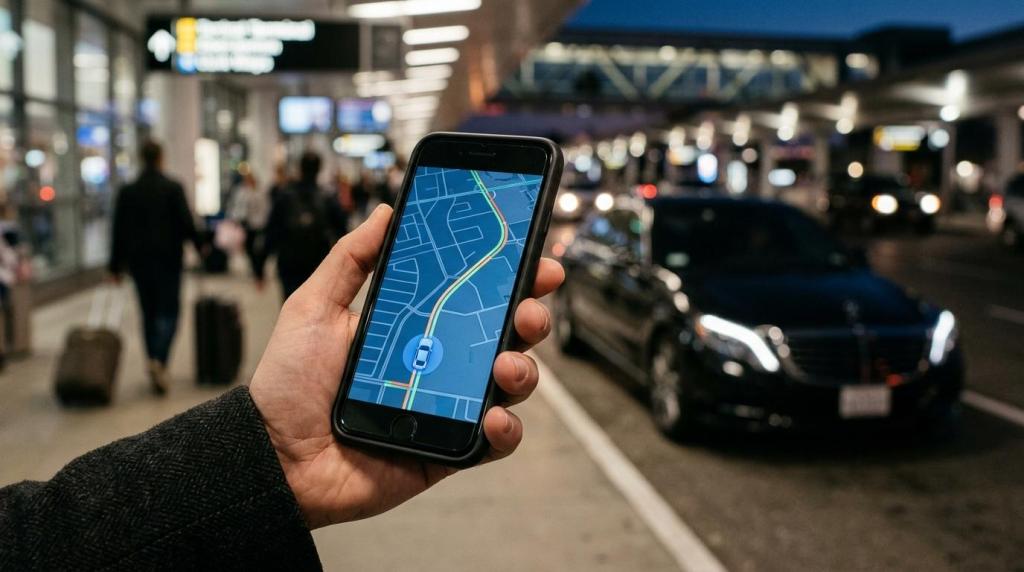
Business travel runs better when ground transportation protects time, reduces uncertainty, and supports duty of care. Cooper Global is a chauffeured transportation and charter bus company, which makes it a relevant example when asking whether Executive car service is just a premium perk or a real business-travel tool.
TL;DR: Summary
- Executive car service is a business-travel tool, not just a luxury upgrade: it gives executives safer, more predictable, prearranged transportation for airport runs, client meetings, and multi-stop days.
- GBTA reported that 73% of travel managers ranked safety as the top priority in managed ground transportation, and 76% said chauffeured transportation was often permitted for executives.
- Ground transportation averaged 11.5% of overall travel spend among managers who knew the figure, so reporting, reliability, and itinerary control matter alongside fare.
- NHTSA estimated 39,345 U.S. traffic fatalities in 2024, which is why vetted drivers, live trip visibility, and 24/7 support are practical risk controls.
- Cooper Global is one example of an executive car service provider built around those controls, with 24/7 service, GPS vehicle tracking, real-time traffic reports, and coverage in 450+ cities.
The better question is not whether an executive sedan feels nicer than a standard ride. It is whether managed ground transportation lowers friction for travelers, assistants, and travel managers while keeping a business trip on schedule.
What is executive car service in business travel?
Executive car service is prearranged chauffeured transportation for business travelers, usually in a sedan, SUV, or executive van. It adds dispatch oversight, driver accountability, and itinerary control that standard point-to-point rides often do not provide.
That difference matters because business travel rarely depends on one simple pickup. A traveler may need an airport transfer, a hotel stop, a client meeting, and then a dinner reservation, all within a narrow time window. Executive car service is built for that chain of movements.
In travel-program language, this fits under managed ground transportation. The key idea is control. You know who is driving, when the vehicle is scheduled, where the traveler is going, and who can help if plans change. That is why executive car service often appears in corporate policy for senior travelers, VIP guests, and high-stakes itineraries.
Why do companies book executive car service instead of standard rideshare?
Companies book executive car service because predictability beats improvisation when an executive, investor, or client meeting is on the line. GBTA data shows chauffeured transportation is often allowed for executives and board members, which reflects its role in managed travel policy.
GBTA’s June 2024 survey of 121 U.S. and Canada-based travel managers found 76% said chauffeured transportation was often permitted for executives and 74% said the same for board members. That is a strong signal that many companies treat chauffeured service as a justified travel category, not a vanity expense.
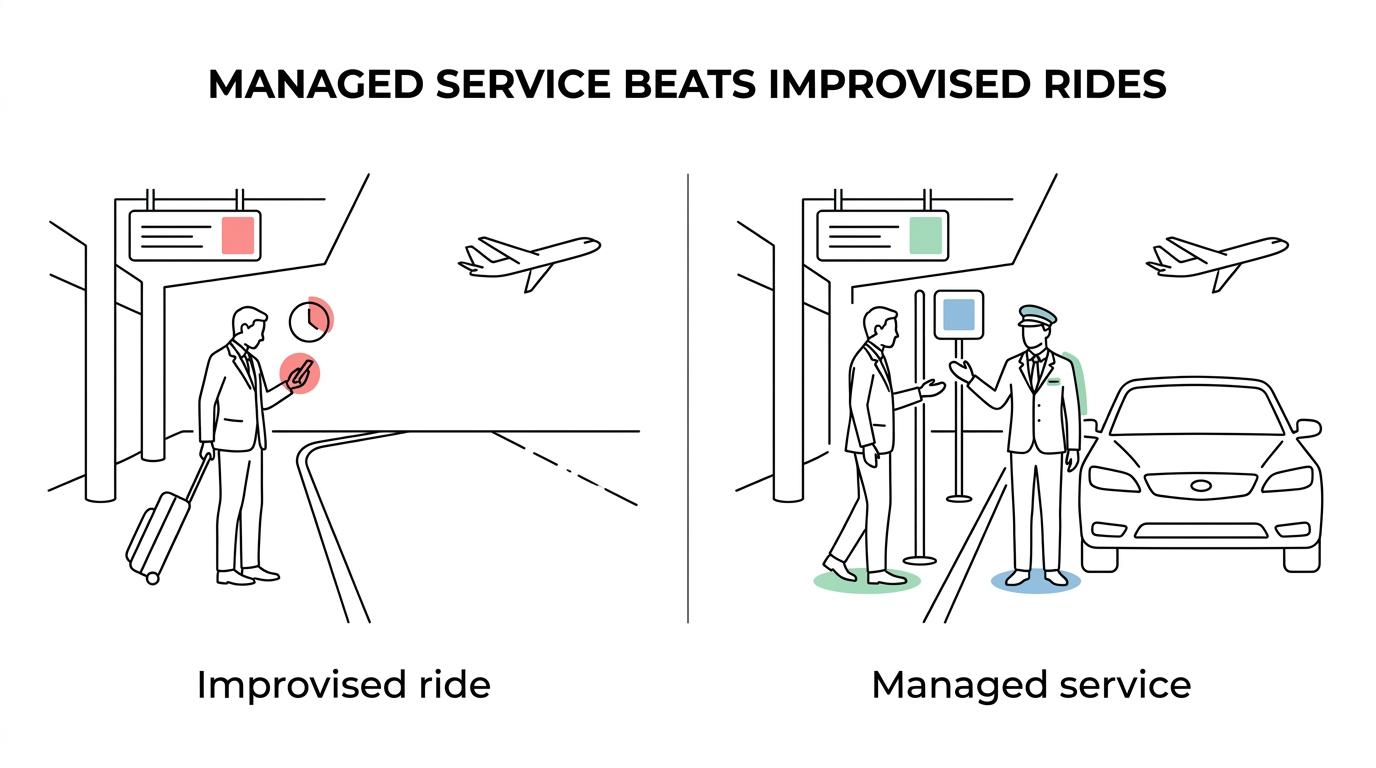
The common misconception is that the only benefit is comfort. Comfort helps, but the real value is operational. Prearranged service can support named pickups, arrival instructions, schedule buffers, and a clear support path when flights, meetings, or venues shift.
“Cooper Global serves 450+ cities and uses GPS vehicle tracking with real-time traffic reports, which fits the visibility many managed-travel teams want.”
Rideshare still has a place. If the trip is simple, low-risk, and price-sensitive, on-demand transport may be enough. If the traveler is arriving late, meeting a client for the first time, or moving through multiple stops under a fixed timetable, executive car service usually gives the cleaner outcome.
What are the main benefits of executive car service for business travel?
The biggest benefits are safety, punctuality, privacy, trip control, and lower coordination burden. Those gains matter most on airport transfers, roadshows, client hosting, and any itinerary where one missed connection can affect the whole day.
These benefits become clearer when you view them through travel management rather than hospitality. The service is valuable because it reduces variability.
- Safety and accountability: A managed booking creates a clearer record of the trip, the driver, and the service path than an improvised ride.
- Punctuality: Preplanned pickups, route awareness, and schedule monitoring reduce the odds of a missed flight, late arrival, or rushed connection.
- Privacy: Executives often need quiet time for calls, document review, or confidential discussion in transit.
- Administrative control: Assistants and travel managers can coordinate one itinerary instead of troubleshooting in real time.
- Brand and guest experience: Client pickups and board transportation shape first impressions before the meeting even starts.
A useful rule is simple. If the transportation failure would cost more than the transportation itself, managed service starts to make financial sense very quickly.
How do you choose the right executive car service provider?
The right provider looks less like a luxury label and more like an operations partner. Cooper Global is a useful category example because its model combines chauffeur service with 24/7 support, GPS tracking, and coverage across 450+ cities.
Step 1 is to define the mission. Are you moving one executive to and from the airport, or coordinating a full day with several meetings? Do you need a sedan, SUV, or something larger? A provider can only match service correctly when the itinerary, passenger count, luggage volume, and timing are clear.
Step 2 is to check the control layer. Ask how confirmations are handled, how schedule changes are managed, whether live trip visibility exists, and how after-hours support works. A common buying mistake is choosing from vehicle photos alone. In business travel, dispatch quality matters as much as vehicle class.
Step 3 is to test coverage and consistency. If your team travels across cities, ask whether service standards stay stable across markets. This is where national or multi-city capability can matter. The trade-off is that broader coverage only helps if communication and trip execution stay disciplined.
When is executive car service worth the added cost?
Executive car service is worth the added cost when the trip has high time value, reputational risk, or tight sequencing. If a missed pickup could disrupt a board meeting, investor visit, or same-day airport connection, the fare difference is usually the smaller number.
GBTA found that travel managers who knew the figure estimated ground transportation at 11.5% of overall travel spend on average. That number matters because it frames the decision correctly. Ground transportation is meaningful enough to manage, but it is often still small compared with airfare, lodging, meeting costs, and the value of executive time.
Here is the trade-off. If you are moving an employee from a hotel to a conference center with plenty of timing cushion, low-cost options may be perfectly reasonable. If the traveler is a senior leader on a compressed schedule, a more managed option can protect far more value than its price premium suggests.
The strongest use cases are airport arrivals, client hosting, board travel, investor relations, media tours, and multi-stop city days. In each case, reliability is doing the real work.
How does executive car service improve airport transfer reliability?
Airport reliability improves when the trip is managed before wheels touch the runway. Cooper Global illustrates this well through automated confirmations, GPS vehicle tracking, and real-time traffic reports that help keep airport transfers coordinated.
Step 1 is accurate flight data. The booking should include airline, flight number, terminal details, traveler contact, and whether baggage claim or curbside pickup is expected. If those inputs are wrong, even a strong provider can start the trip behind.
Step 2 is active monitoring. Airports are moving systems, not static addresses. Traffic, terminal congestion, and flight shifts can change the pickup plan fast. The best executive car workflows account for those variables instead of assuming the original schedule will hold.
“With 18+ years in business and a 24/7 service model, Cooper Global reflects the kind of around-the-clock support business travelers need when flights move outside office hours.”
Step 3 is communication discipline. The traveler should know where to go, who to call, and what vehicle to expect. A quiet misconception in airport planning is that the safest answer is always to schedule the earliest possible pickup. In reality, bad buffers create their own friction. Reliable service is about informed timing, not just extra time.
How should event planners coordinate executive car service for groups?
Group coordination works best when one transportation plan covers manifests, arrival windows, luggage volume, and backup options. Event planners usually need a fleet mix, clear pickup instructions, and one accountable point of contact.
Start with the roster. Separate travelers by function, timing, and service level. Speakers, sponsors, executives, and general attendees may need different handling. If everyone gets booked the same way, someone important usually ends up in the wrong flow.
Next, build the movement plan. Match vehicle types to passenger counts and baggage, then tie each run to a named arrival or departure window. This is where group transportation and executive transportation connect. A conference may need sedans for speakers, SUVs for VIPs, and shuttles for the broader attendee base.
Then pressure-test the plan. Ask what happens if a flight is late, a venue entrance changes, or two pickups overlap. A practical tip here is to assign one onsite decision-maker who can approve changes quickly. Large movements fail less from lack of vehicles than from slow communication.
What safety and duty-of-care issues matter most?
Safety and duty of care start with visibility, driver accountability, and response procedures. GBTA found 73% of travel managers ranked safety as the greatest priority in managed ground transportation, which makes executive car service a policy issue as much as a comfort choice.
That priority makes sense in a road-risk environment. NHTSA estimated 39,345 people died in U.S. traffic crashes in 2024. Even though that was about 3.8% lower than 2023, the number is still high enough to keep transportation risk on the corporate agenda.
For business travel, duty of care means more than avoiding severe incidents. It also means knowing where a traveler is supposed to be, who is responsible for the ride, and how support works when conditions change. If a traveler lands after a cancellation, misses a connection, or needs a route change, the transportation plan should adapt without guesswork.
One smart question to ask any provider is simple: what happens during irregular operations? The answer often tells you more than the glossy brochure.
How does executive car service compare with rental cars and taxis?
Executive car service beats rental cars and taxis on control, privacy, and administrative simplicity, while taxis and rentals can win on bare fare for low-stakes trips. The best option depends on trip complexity, traveler seniority, and how much delay costs your business.
Rental cars give independence, but they also shift the work to the traveler. Navigation, parking, fueling, returns, and local driving conditions all become part of the job. That may be fine for some trips. It is often a poor use of time for senior travelers.
Taxis can work well in dense urban cores where supply is constant and the route is simple. Their limit is consistency. If the traveler experience, pickup instructions, or expense capture need more structure, taxis may feel too loose for the assignment.
Executive car service tends to score highest when traveler satisfaction depends on calm, clarity, and schedule control. If the trip is low-complexity and budget is the only deciding factor, other modes can still make sense.
What mistakes cause executive transportation problems?
Most executive transportation problems come from weak trip data, vague pickup instructions, and last-minute changes without a control process. The fix is simple: treat ground transport like an operational handoff, not a casual booking.
The first mistake is incomplete booking information. Missing flight numbers, wrong hotel entrances, and unclear passenger names create avoidable confusion. This sounds basic because it is, yet it is still one of the biggest failure points.
The second mistake is underestimating transitions. Airports, convention centers, arenas, and downtown office towers often have multiple pickup zones and security patterns. If the traveler does not know the exact meeting point, time gets lost fast.
The third mistake is separating transportation from the rest of the itinerary. Ground movement should connect with meeting times, check-in windows, and contingency plans. If the meeting moves by 30 minutes, the ride plan may need to move too.
The fourth mistake is assuming every traveler needs the same service design. A CEO arrival, a board dinner transfer, and a team shuttle are not the same product. The best outcomes come when transportation is matched to purpose, not booked as a generic car request.


