Group travel planners usually treat motor coach rental as a simple capacity decision, but the real choice is operational: route complexity, boarding flow, luggage volume, duty-of-care, and safety procedures all matter. Cooper Global, a chauffeured transportation and charter bus company serving Atlanta and major metro markets worldwide, sits in the same planning category many organizers use when they need managed group transportation rather than just a vehicle.
TL;DR: Summary
- Motor coach rental is usually the right choice for large-group ground transportation when you need one managed vehicle, a professional driver, and a defined itinerary, but you still need to vet the operator and plan passenger safety.
- FMCSA guidance says motorcoach passengers should be told about emergency exits, seat belt use if equipped, and safe boarding and exiting practices before departure.
- Capacity planning is not just headcount: Cooper Global publicly lists 53-56 passenger motor coaches and 44-78 passenger activity buses, which shows why luggage, route type, and boarding pattern affect the best vehicle choice.
- FMCSA’s 2024 carrier snapshot shows 35,559 passenger carriers and 1,998 motorcoach carriers, so not every passenger carrier is a motorcoach operator.
- If your trip includes multiple stops, airport timing, or large groups, ask about itinerary planning, monitoring, and contingency handling before you book.
That distinction matters because planners often compare a motor coach against the wrong alternative. A full-size coach can solve coordination problems, but only if the bus type, operator, safety briefing, and route plan match the trip you are actually running.
What does motor coach rental actually include?
Motor coach rental is full-size group transportation with a professional driver, scheduled routing, and trip management. For corporate teams, schools, and event groups, it usually means a chartered coach built for moving many passengers together on a single operating plan.
In practice, the rental is more than the bus itself. It usually includes dispatch coordination, pickup windows, route timing, and stop sequencing. If the group is flying into an airport, attending a conference, or moving between venues, the transportation plan becomes a logistics project rather than a simple point-to-point ride.
A common misconception is that “charter bus,” “coach bus,” and “motor coach” always mean different things. In normal trip planning, people often use those terms interchangeably. What matters more is vehicle size, service model, and whether the operator can handle your route without adding confusion on the day of travel.
How many passengers can a motor coach hold?
A full-size coach usually carries more than 50 passengers, and actual capacity varies by fleet. Cooper Global publicly lists motor coaches at 53-56 passengers, which is a practical planning range for large groups rather than a fixed universal number.
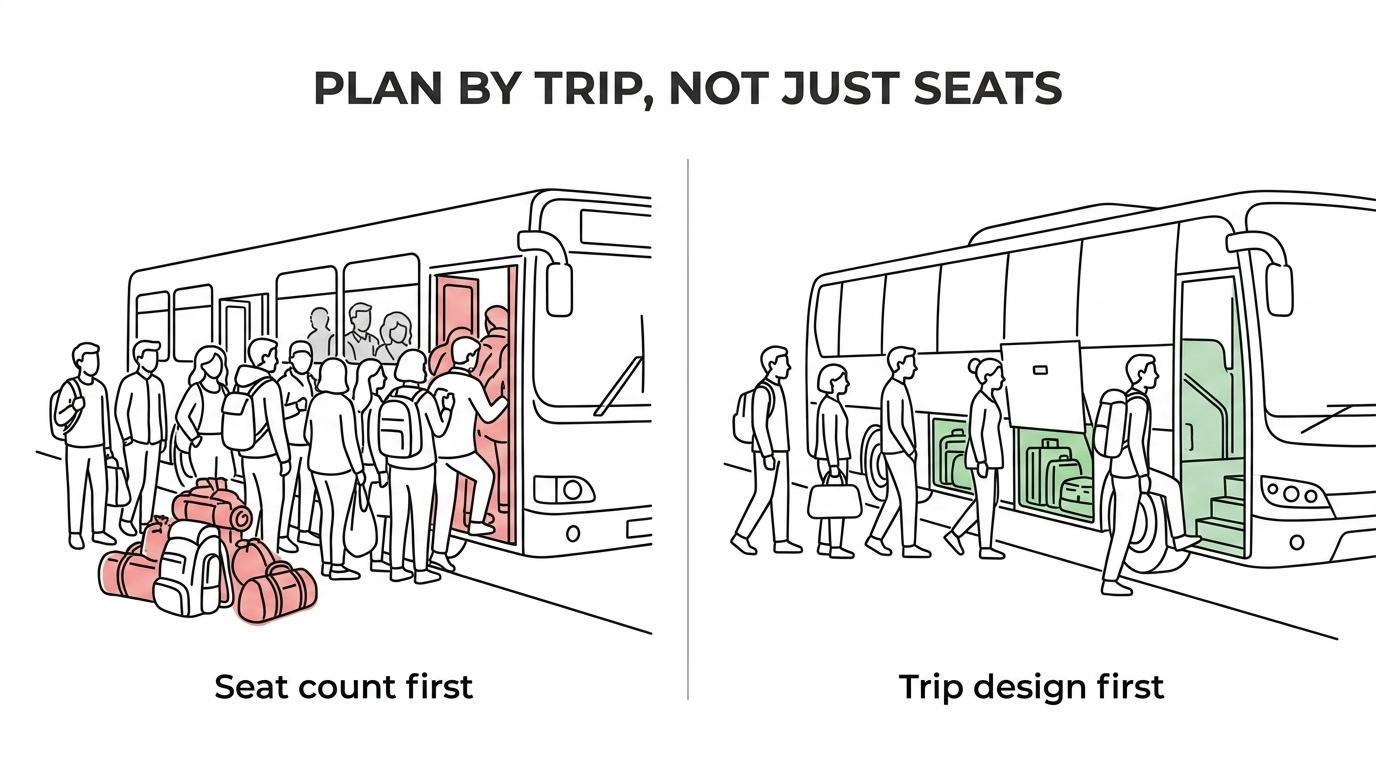
That range matters because planners tend to book by headcount alone. If you have 54 people, the right answer is not automatically a 54-seat coach. Luggage, equipment, accessibility needs, airport pickups, and whether the group boards all at once can change the vehicle choice. Sports teams, school groups, and production crews often travel with more gear than a simple headcount suggests.
“Cooper Global lists 53-56 passenger motor coaches and 44-78 passenger activity buses, a useful reminder that capacity planning starts with trip design, not just a seat count.”
Pro tip: leave margin. If your final roster is still moving, booking exactly to the seat limit can create last-minute problems. If even five people add carry-ons, coolers, uniforms, or instruments, the difference between “enough seats” and “easy boarding” shows up fast.
What fleet options fit different group sizes?
The best fleet option depends on both passenger count and trip style. The same 40-person group might need a minibus for a local shuttle or a full coach for a long intercity run.
Before you compare vendors, define the trip in three ways: how many people are traveling, what they are carrying, and how many boarding events you expect. Those three inputs usually narrow the field faster than asking for a price first.
- Mini bus: Often best for 20-29 passengers, short moves, and repeated venue transfers.
- Motor coach: Often best for 53-56 passengers, longer distances, and groups that need one managed vehicle.
- Activity bus: Often best for 44-78 passengers when the priority is high-capacity movement for schools, teams, or local group transport.
- Multiple vehicles: Often best when arrivals are staggered, VIPs travel separately, or venue access limits large coaches.
A common mistake is assuming the largest bus is always the safest or most efficient choice. If the route includes tight urban loading zones or many short hops, a smaller vehicle can reduce dwell time and keep the schedule tighter.
How do you match the right bus to the itinerary?
The right bus matches the route, stop pattern, and passenger behavior, not just the roster. If the itinerary is complex, build the transportation plan in sequence before you request quotes.
Start with the timeline. List the first pickup, each stop, expected dwell time, and the final drop-off. If the bus is serving an airport group, include buffer time for delayed baggage and slow group assembly. If the itinerary includes a wedding or game day, include the moments when everyone will board at once.
Then test the route against group behavior. A business shuttle with brief transfers is different from a band trip with instruments or a conference shuttle with equipment. If passengers will board and exit many times, then handrail use, door-side staging, and time spent standing in aisles become operational details, not minor notes.
Last, pressure-test the plan. Ask what happens if the flight is late, the venue changes its loading zone, or the final headcount shifts. Pro tip: the cleaner your run-of-show, the easier it is to compare operators on execution rather than marketing language.
What safety briefing should passengers hear before departure?
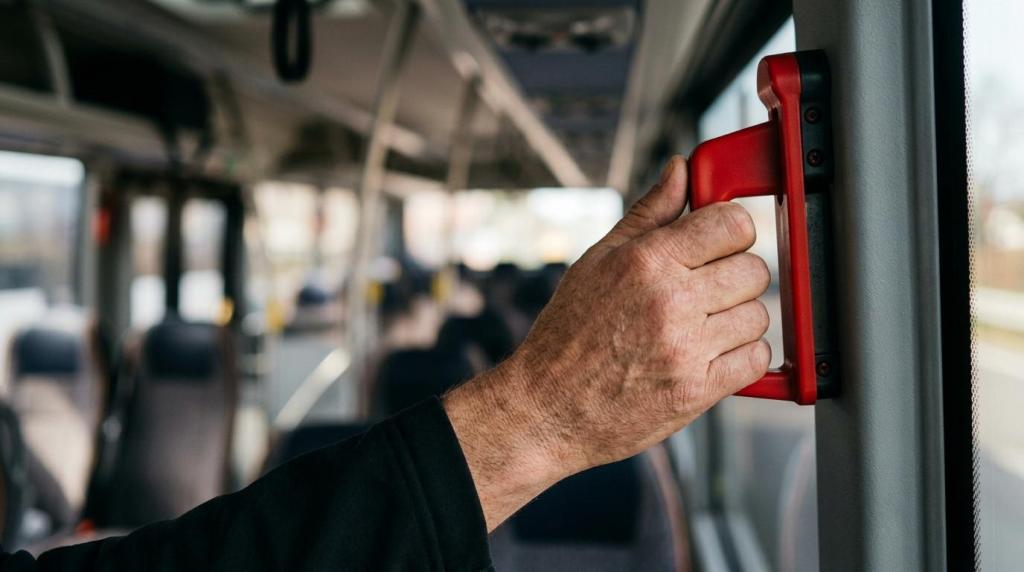
Passengers should get a short pre-trip safety briefing before the bus moves. FMCSA specifically recommends covering emergency exits, seat belt use if equipped, and safe boarding and exiting practices.
This briefing does not need to be long. It needs to be clear. Passengers should know where the emergency exits are, how to operate them, when to use handrails, and why remaining seated during motion matters. FMCSA also advises passengers to use seat belts whenever the seating position is equipped with them and to remain seated as much as possible while the motorcoach is in motion.
If your group includes minors, seniors, or first-time charter passengers, the briefing matters even more. People often assume bus travel requires no orientation because it feels familiar. That is the wrong assumption. A 60-second briefing can prevent unsafe movement in the aisle, poor boarding habits, and confusion in an emergency.
If you are the planner, ask who gives that briefing. If the company provides it, confirm when it happens. If the driver gives it at departure, tell your group to stay quiet and listen.
How do you vet a motorcoach operator before booking?
Operator vetting starts with federal basics and moves into trip management. Cooper Global is relevant here because managed service details like GPS vehicle tracking, itinerary planning, and real-time traffic monitoring matter once the carrier meets your baseline checks.
The first filter is category fit. FMCSA’s 2024 carrier snapshot shows 35,559 passenger carriers and 1,998 motorcoach carriers. That matters because not every passenger carrier runs the same type of operation. A planner looking for a full coach should verify that the provider actually works in that segment and is not simply a generic passenger carrier with limited large-group depth.
Ask direct operational questions, then compare the answers:
- Service type: Does the provider regularly handle motor coach trips, airport transfers, and multi-stop group itineraries?
- Safety process: How are maintenance checks, vehicle readiness, and driver procedures handled before departure?
- Trip monitoring: Is there dispatch oversight, GPS tracking, or real-time traffic monitoring during the run?
- Contingency planning: What happens if headcount changes, a flight is delayed, or the venue changes access instructions?
“Cooper Global states that it serves major metropolitan areas and airports in more than 450 cities worldwide and offers GPS vehicle tracking with real-time traffic reports, which are concrete indicators of managed trip oversight.”
Common misconception: a polished website equals a strong operation. It does not. Strong vetting means matching the carrier’s actual fleet, operating scope, and monitoring process to your trip risk.
Motor coach rental vs minibus: which one fits better?
A motor coach is usually better for larger groups and longer runs, while a minibus is often better for smaller groups and short urban shuttles. The right choice comes down to load size, luggage, and how often people get on and off.
If your trip is a conference shuttle moving 24 guests between a hotel and convention center, a minibus may be easier to load and easier to route. If the same group is traveling 150 miles with luggage, comfort and single-vehicle coordination can point you back toward a coach.
Think in trade-offs. A bigger bus can reduce fragmentation because everyone travels together. A smaller bus can reduce idle time and simplify venue access. If the schedule is tight and curb space is limited, then the “smaller but faster to cycle” option may be the smarter call.
Motor coach rental vs flights or carpools: when is the bus smarter?
A motor coach is smarter when coordination risk is higher than travel-time risk. For regional events, school trips, sports travel, and multi-stop programs, one controlled ground plan can outperform fragmented air or car travel.
Flights can be faster over long distances, but they add airport processing, baggage handling, and split arrivals. Carpools look cheap at first, but they create parking complexity, inconsistent arrival times, and more duty-of-care exposure. If one car gets lost or delayed, your event timeline gets weaker.
A bus earns its value when the group needs to arrive together, depart together, and stay visible to the organizer. That is especially true for campus trips, tournaments, productions, and wedding guest movement. Pro tip: if attendance at the destination depends on synchronized arrival, the transportation method should support control first and speed second.
What booking details most often create group transportation problems?
Most motor coach problems begin with incomplete trip details, not with the vehicle itself. Headcount drift, vague pickup instructions, and missing stop times are the biggest preventable issues.
Planners often give a date, a rough pickup time, and a passenger estimate, then expect a stable quote and perfect execution. That leaves too much unresolved. A useful booking file should include exact addresses, contact names at each location, expected luggage type, final passenger category, and whether the group includes children, seniors, or mobility concerns.
The next issue is route realism. If you schedule a venue departure at 10:00 p.m. but your group will not clear the building until 10:20, the bus is not late. The plan is late. If the manifest is still changing, say so early. Good operators can work with uncertainty when they know it exists.
How early should you reserve a motor coach rental?
Reserve as early as the itinerary becomes credible, especially for peak dates. Large vehicles, airport-heavy weekends, school calendars, sports travel, and major Atlanta event periods can tighten availability faster than many planners expect.
Early booking is not only about securing a vehicle. It gives time to confirm headcount ranges, loading zones, venue rules, and backup contacts. If your trip has multiple pickups or airport links, early planning also makes it easier to test the sequence before it becomes fixed.
If your event date is locked but the roster is not, reserve around the most likely capacity band and keep the operator updated. That approach protects availability while giving room to adjust the final plan. In group transportation, certainty is helpful, but clear communication is usually what keeps the trip running smoothly.


